
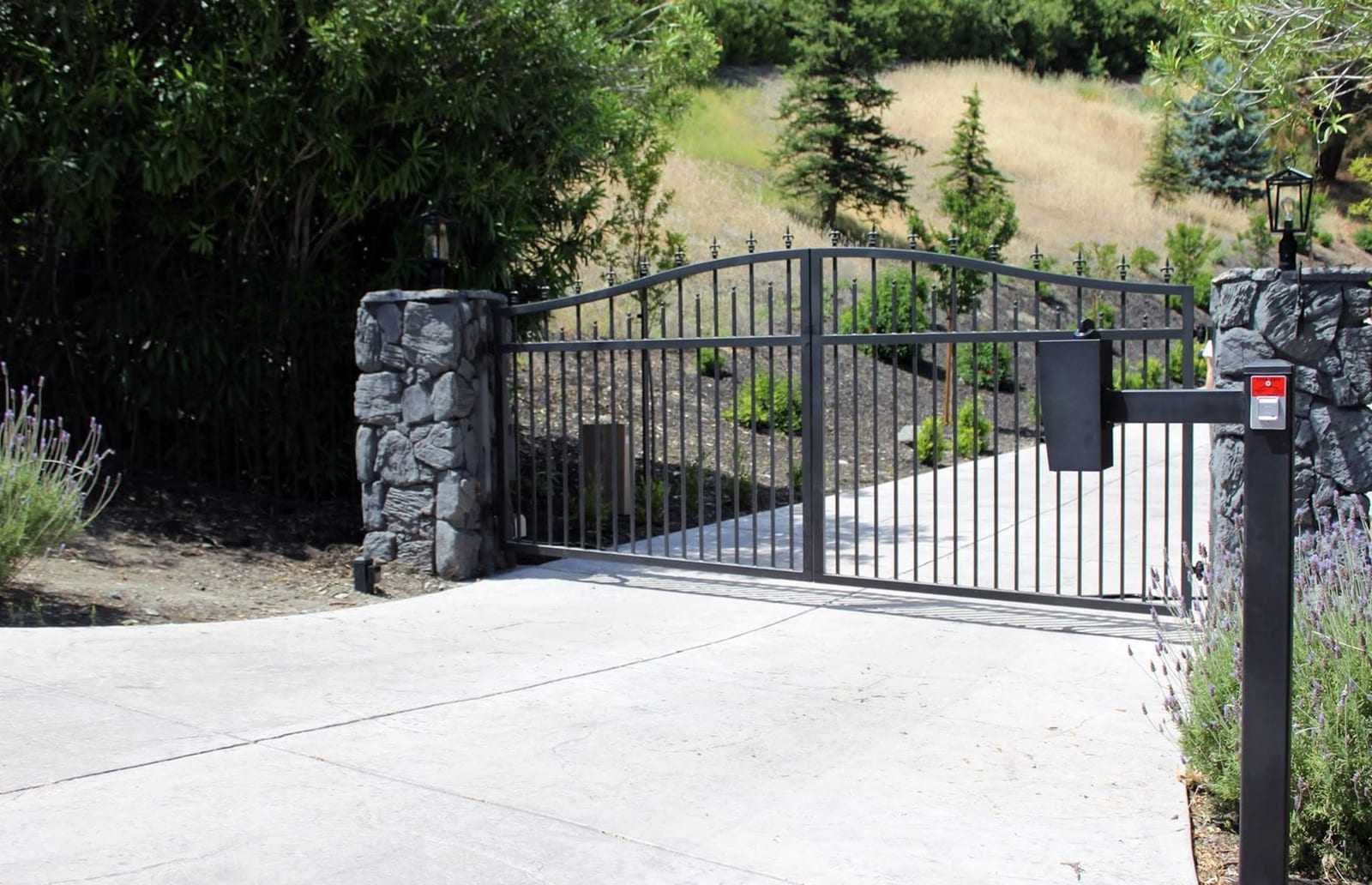
Gate Installation and Replacement
New swing, sliding and cantilever gates, replacements for gates past saving, and new operators on gates that still hang true.
A new gate starts with the opening it has to fill: the width of the drive, the room beside it, the slope of the ground and whether the gate will run on an operator. A replacement starts with a different question: whether the gate that stands there now is worth keeping.
We install driveway gates, and sliding and swing gates with operators, from homes to larger properties. Where the gate is sound and only its operator has worn out, the operator alone is replaced, and no gate is handed back before it has run full open-and-close cycles.
Gate Styles and the Space They Need
The style decides how much room a gate needs and which operators can move it. Swing gates need clear ground for each leaf to travel through, so a drive that rises behind the gate can leave too little room. Sliding and cantilever gates need a clear run beside the opening instead.

A cantilever gate rides on rollers beside the opening and carries a counterbalance tail, so nothing touches the ground across the drive. That suits gravel lots, uneven ground and Denver winters, when snow and ice pack into a ground track and stall a conventional slide gate. A slide gate on a track is simpler and needs a shorter run, as long as its track stays clean and level.
| Style | Best suited for | Space needed | Operator options |
|---|---|---|---|
| Swing, single or double leaf | Homes and entrances where looks matter, on level or gently sloping drives | Clear ground inside the arc of each leaf, about as deep as the leaf is wide | An arm operator on the post or pillar, or an underground operator at the hinge |
| Sliding, on a ground track | Flat drives and lots with no room to swing, and wide openings | A clear run beside the opening about as long as the gate, and a level track across the drive | A slide operator on a pad beside the gate, driving a chain or a gear rack |
| Cantilever | Business lots, gravel or uneven ground, and openings where a track would not stay clear | A longer run beside the opening, about half again its width, for the counterbalance tail | A slide operator sized for the heavier frame |
| Barrier arm | Apartment community and HOA entrances, and business lots with steady traffic | Room beside the lane for the cabinet, and clear space for the arm to lift | A barrier operator with the arm, often paired with a keypad, a card reader or a vehicle detector |
| Pedestrian | Side yards, backyards and walk-throughs beside a vehicle gate | Room for the leaf to swing, usually into the property | Most open by hand with a latch or lockset; a keypad or an electric strike where entry is controlled |
Repair or Replace
Replacing a gate that only needs hinges throws away a sound frame, and repairing one that keeps failing pays for the same visit again and again. Five yes-or-no questions show which way a gate leans.
Repair-or-Replace Helper
Answer each question yes or no, then press Show the Suggestion.
Planning a New Gate
These decisions shape each other, so they are worth settling together: a heavy steel gate calls for a heavier operator, and an automatic gate needs power at the post.
- Material: steel, aluminum or wood, each with its own weight, look and upkeep
- Style: swing, sliding, cantilever, barrier arm or pedestrian, and the room each one needs
- Width: the clear opening from post to post, and whether one leaf or two suits it
- Manual or automatic: opened by hand, or by an operator with power brought to the gate
- Access control: a keypad, remotes, an intercom, a card reader or a phone app, and who needs to get in
- Rules: any HOA or property-manager rules on height, style, color or automatic gates
At apartment complexes, HOA entrances and business lots, access control and the rules usually involve the board or the property manager as well as the people who use the gate.
Openers, Operator Swaps and HOA Approval
Can an opener be added to my existing gate?
Often, yes, as long as the gate swings or slides freely by hand and its posts and hinges are sound. An operator makes any sag or binding worse, so those are put right first. The gate’s weight, length and style decide which operator fits, and power has to reach the gate.
Can the operator be replaced without replacing the gate?
Yes. When the gate still hangs true but the operator is worn out, keeps failing or is short of parts, the operator alone is swapped for one sized to the gate. The keypad codes and remotes are then programmed to the new operator.
Do I need HOA or city approval for a new gate?
It depends on where the gate goes. Many HOAs, and some cities, have rules on gate height, style, setbacks from the street or automatic gates across a drive. Check with the association or the city before a gate is ordered, since a design that is turned down is hard to change once it is built.
Call (720) 780-9549 to talk through a new gate or a replacement, or send the width of the opening and a few photos with a request.

