
What Affects the Cost of a Gate Job
Size, material, gate type, operator, condition, access control, power and ground: what makes one gate job larger or smaller than another.
Two gates that look alike from the street can be very different jobs. One needs a new pair of hinges; the other needs a post reset, a heavier operator and power brought across the yard. The cost follows the work, so the useful question is what makes the work larger or smaller.
The same few things decide it on every job, at a house or at a business lot: the gate’s size and material, its type, whether it runs on an operator, the state of what is there now, access control, power and the site itself. None of them carries a set figure; together they make the job what it is.
Cost Factors
Each factor moves a job up or down on its own, and they stack: a wide steel gate on an operator, with a keypad and a long power run, is a far larger job than a hand-opened gate of the same width.
| Factor | How it affects the job | Example |
|---|---|---|
| Gate size | A wider or taller gate weighs more, so it needs more material, stronger posts and hinges, and a larger operator if it is automatic | A double swing gate across a two-car drive needs more of everything than a walk-through gate |
| Material | Steel, aluminum and wood differ in weight, in how they are cut and joined, and in how they hold up to sun and snow | A heavy steel leaf on welded brackets takes more work to hang than a light aluminum gate on bolt-on hinges |
| Type of gate | Swing, sliding, cantilever, barrier arm and pedestrian gates each need their own hardware, ground work and room to move | A cantilever gate needs rollers, a concrete pad and a long clear run; a swing gate needs sound hinges and solid posts |
| Operator or manual | An operator brings work of its own: mounting, wiring, safety sensors, limits and remotes | A driveway gate with an operator, photo eyes and remotes is a bigger job than a backyard gate with a latch |
| Condition of the existing gate | Sag, rust, a cracked weld or a leaning post has to be put right before new work goes on, and can tip a repair toward replacement | Re-hanging a leaf on new hinges is a smaller job than resetting a post that frost has lifted |
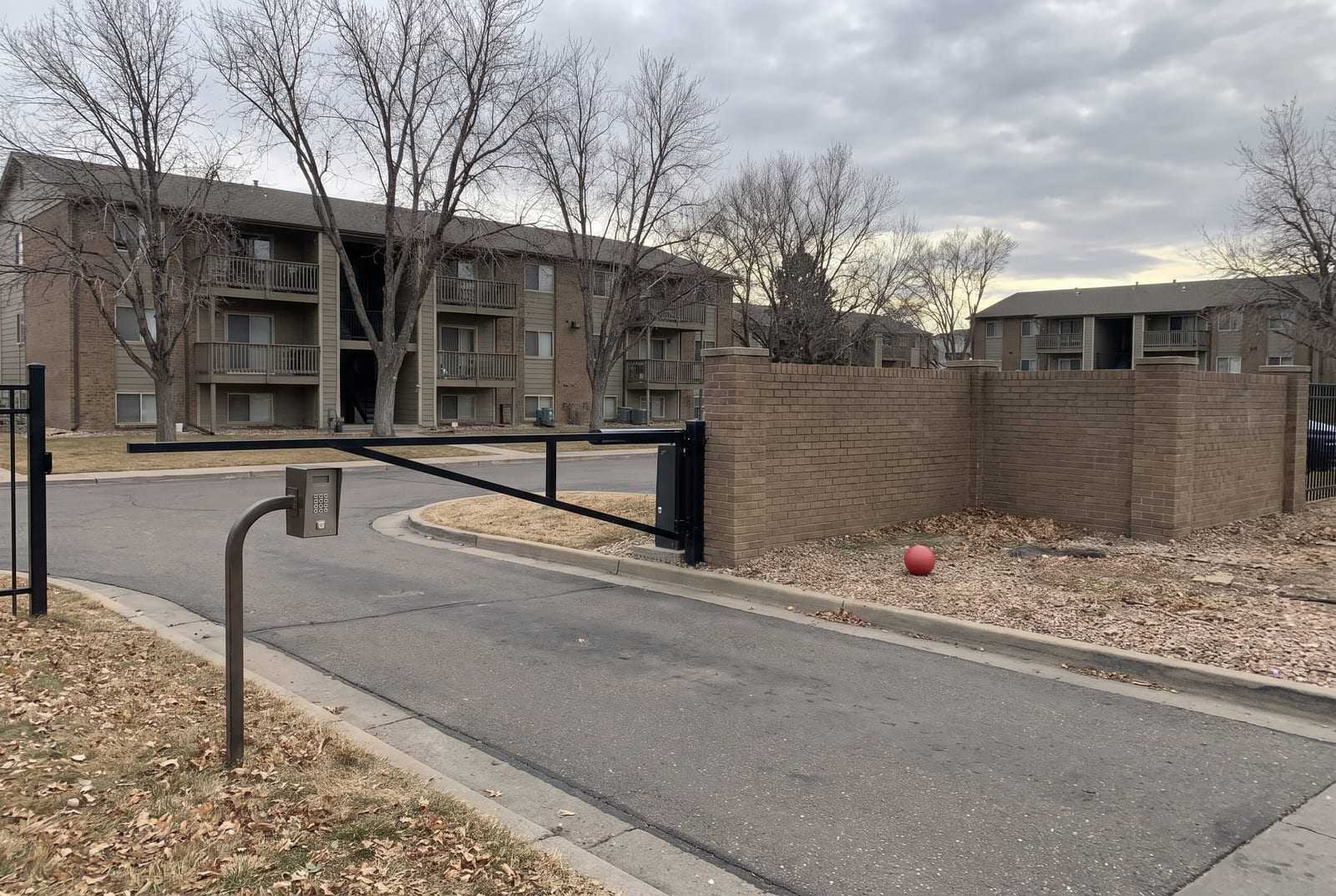
| Access control | Each keypad, intercom, card reader or phone-app link adds hardware, wiring and programming | An intercom with a code for every resident takes far more setting up than one keypad on a gooseneck post |
| Power supply | An operator needs power at the gate: a nearby circuit, a new line run in, or a solar panel and battery where a line is impractical | An outlet already at the pillar saves the trench a new line across a lawn would need |
| Site access and ground | Slopes, rock, tight access, concrete to cut and the depth posts have to reach all change the labor | A level gravel drive is simpler ground than a sloped concrete drive with rock under the posts |
Similar Gates and Repairs That Grow
Why can two similar gates differ so much in cost?
Because the work behind them differs. One gate may hang on sound posts with power already at the pillar, while its twin down the street needs a post reset, a trench for power and a heavier operator. Ground, access and the hardware already in place change the job even when the gates look the same.
Why does a repair sometimes grow into a replacement?
Some problems only show once work starts: rust inside a tube, a cracked weld, a post rotted below ground, or an operator whose parts are no longer made. When fixing the visible fault would leave the gate failing again soon, replacing the worn part, or the whole gate, is the sounder spend. Age, repeat breakdowns, structural damage, rust and scarce parts are the signs a repair-or-replace decision turns on.
Is an automatic gate always the larger job?
For the same gate, yes. The operator brings mounting, wiring, power, safety sensors and set-up, plus any keypad or remotes, and the gate itself has to move freely enough to carry it. An operator can still be added later, as long as the gate and its posts are sound.
Scoping the Job
A few specifics in the request let the job be scoped before the first visit:
- The gate type, and whether it opens by hand or with an operator
- The approximate width of the opening, post to post
- Photos of the gate, its hinges or rollers, and the operator’s label, emailed to manager@speergatesdoors.com
- What is wrong, or what you want: a repair, a new gate, an opener or access control
- Whether power already reaches the gate
- Anything about the site that stands out: a slope, rock, gravel or tight access
Photos say the most. When they arrive before the first visit, the parts the gate needs can arrive with it.
Call (720) 780-9549 to talk a job through, or send the details and photos with a request.